
2013, looking towards Europe
The new academic year at the Cattaneo University began with two inaugural lectures dedicated to European economic and monetary policy and to the role of Italy in the Eurozone.
The new, 2012-2013 academic year at the LIUC University, in Castellanza, began with a focus on Europe. Two big names in the European economic field were called upon to speak in the Bussolati Hall, marking the beginning of the university’s 21st year, which coincides with one of the darkest periods in economic history, not only in Italy, but in Europe. After the European anthem and the initial speeches by the President Paolo Lamberti and the Chancellor Valter Lazzari, there were speeches by Stefano Micossi, the director of Assonime (an association of joint-stock companies) and Chairman of CIR, and Rodolfo Helg, a lecturer in political economics, who was recently appointed to the administration of the LIUC School of Economics and Management.
Paolo Lamberti spoke about the “daily commitment by the university in Castellanza to open up towards Europe and the world, with a strong program of international exchanges, the double degree program, the Summer School, the Erasmus program, the courses taught in English, and the internationalisation program for lecturers and administration staff.” The Chancellor, Valter Lazzari, warned those who could not see the light at the end of the tunnel of the economic crisis, and emphasised that “we do not want to become resigned to the idea of living at a time of diminished expectations; we need to adapt, to continually sow, design, and innovate,” and, in order not to give in to this pessimism, the LIUC has set, as an obligation, the wish to produce “educated young people who are citizens of the world, true cosmopolitans, who know how to manoeuvre among different cultures.”
The two speeches were followed by two lectures about Europe and Italy by Micossi and Helg. Micossi outlined the journey begun by Europe towards economic and monetary union. “The Eurozone has, more or less, made the necessary adjustments in the three years of the crisis, but has not dispelled doubts about the possibility of surviving in the medium-long term, which is still threatened by severe imbalances between the member countries.” In contrast, Helg’s analysis focused on Italy’s role in the Eurozone, by analysing the structural problems that the politics of last 20 years has failed to resolve, or even made worse, and how we can recover.



Dalla Home
Varese
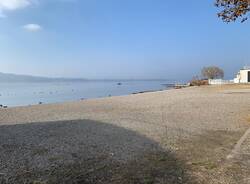
Lago di Varese mai così basso in inverno e la pioggia ancora non si vede
Varese
Chiesti oltre 30 anni di carcere per la “Banda Vasi”
Castelveccana - Milano
Omicidio di Castelveccana, iniziate le perizie balistiche
Cronaca
Prima a Malpensa e poi in ospedale a Gallarate, ricostruite le ore prima dello schianto mortale in autostrada
La community di VareseNews
Loro ne fanno già parte
Ultimi commenti
mike su La neve in montagna continua a sciogliersi. Contro la siccità si aspetta la pioggia
Felice su La festa "techno" nei boschi di Lonate Ceppino causa proteste
Rolo su Pullman in sosta con i motori accesi, la segnalazione e la risposta di Autolinee Varesine
lenny54 su "C'è del dolo nelle modifiche al Superbonus"
Felice su Architetti, geometri, ingegneri e costruttori all'unisono: "Da Super Bonus a Super Malus"
Felice su Dentro la loggia del Battistero di San Giovanni a Varese restituita alla città







Accedi o registrati per commentare questo articolo.
L'email è richiesta ma non verrà mostrata ai visitatori. Il contenuto di questo commento esprime il pensiero dell'autore e non rappresenta la linea editoriale di VareseNews.it, che rimane autonoma e indipendente. I messaggi inclusi nei commenti non sono testi giornalistici, ma post inviati dai singoli lettori che possono essere automaticamente pubblicati senza filtro preventivo. I commenti che includano uno o più link a siti esterni verranno rimossi in automatico dal sistema.