
The emergency is over, the refugees leave the reception centres.
They came two years ago, on the wave of the political and civil disorder that stuck North Africa. Some have already left, others know where they are going, but many still do not.
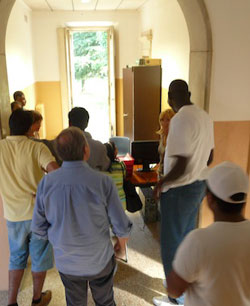 After two years, the doors of the reception centres are closing for the refugees, who arrived on the wave of the political and civil disorder that struck North Africa. Today, Thursday 28 February, these refugees, who have been accommodated in hotels, humanitarian centres and facilities, which have been maintained with a fund set up by the ministry to deal with the emergency of two years ago, are coming to the end of the reception process.
It has taken this time for the State to contain the dramatic situation that was taking place on the southern coasts, on Lampedusa first and foremost, where the number of boats landing had reached the proportions of a mass exodus. But this time has also been necessary for central police stations to verify the bureaucratic state of the migrants and their requests for political asylum.
We should remember that, when they arrived in Italy, many of these people still had the horrors of war and desperate poverty in their eyes. They had come from Ghana, the Ivory Coast, Burkina Faso, Gabon, Mali, Niger and Nigeria. They had all ended up in Libya, for work or out of desperation, and had found themselves in the last, troubled phase of the Gaddafi regime.
Initially, they were sent throughout Italy, to be hosted by councils, and in these two years, this is where have stayed. Each one received an allowance, money to cover board and lodging in the reception facilities. Some councils, especially with the help of the voluntary associations, organised training courses, recreational and professional activities; others just completed the reception procedures.
Today, their “stay” is over. Each refugee has been given €500 and a residence permit, and it is now up to them to find their way. There were those in Varese, who were staying at the Plaza Hotel, about fifteen people who had been brought by bus from Somma Lombardo (“of the 35 who had arrived, the others had already found their own ways,” explained the Somma Lombardo councillor, Claudia Colombo).
Many had already left the reception centres; as soon as they received their residence permits, they found somewhere to go, or left to go to other countries. Almost all of those received in Gallarate already left, independently, in January. Many chose to go to France, Germany, and the North of Europe, others found work in the area. And others found accommodation with friends and relatives.
But some are still not sure where to go. “I’ll move around, sleep in the station.” They say this with a smile on their faces, an expression of people who are sure that they will succeed somehow. But there are those who are worried; after all, today, they no longer have the guarantee of a roof over the heads. They have €500, a new language they have learnt, and a network of contacts and friends, many of whom are themselves in similar conditions.



Dalla Home
Varese
Lago di Varese mai così basso in inverno e la pioggia ancora non si vede
Varese
Chiesti oltre 30 anni di carcere per la “Banda Vasi”
Castelveccana - Milano
Omicidio di Castelveccana, iniziate le perizie balistiche
Cronaca
Prima a Malpensa e poi in ospedale a Gallarate, ricostruite le ore prima dello schianto mortale in autostrada
La community di VareseNews
Loro ne fanno già parte
Ultimi commenti
mike su La neve in montagna continua a sciogliersi. Contro la siccità si aspetta la pioggia
Felice su La festa "techno" nei boschi di Lonate Ceppino causa proteste
Rolo su Pullman in sosta con i motori accesi, la segnalazione e la risposta di Autolinee Varesine
lenny54 su "C'è del dolo nelle modifiche al Superbonus"
Felice su Architetti, geometri, ingegneri e costruttori all'unisono: "Da Super Bonus a Super Malus"
Felice su Dentro la loggia del Battistero di San Giovanni a Varese restituita alla città






Accedi o registrati per commentare questo articolo.
L'email è richiesta ma non verrà mostrata ai visitatori. Il contenuto di questo commento esprime il pensiero dell'autore e non rappresenta la linea editoriale di VareseNews.it, che rimane autonoma e indipendente. I messaggi inclusi nei commenti non sono testi giornalistici, ma post inviati dai singoli lettori che possono essere automaticamente pubblicati senza filtro preventivo. I commenti che includano uno o più link a siti esterni verranno rimossi in automatico dal sistema.