
A “war” between insects to save the chestnut trees
The technicians of Lombardy Region have released the parasitoid insect Torymus sinensis, the natural rival of the chestnut gall wasp.
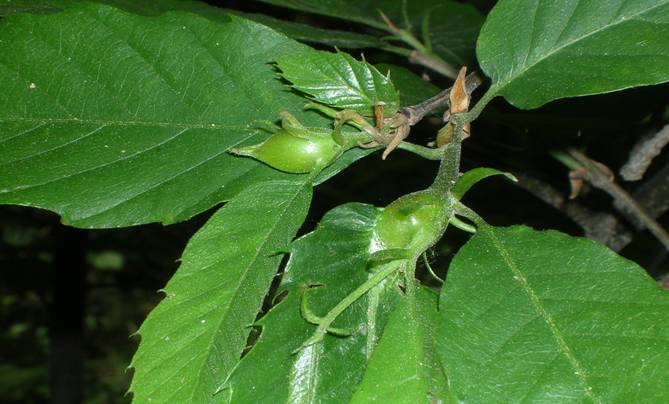 In the last few days, technicians of Lombardy Region (General Agriculture Department, led by Marco Boriani and Marilisa Molinari), have released the parasitoid insect Torymus sinensis into the woods of Arsago Seprio, in the Ticino Park. This insect is the natural rival of the chestnut gall wasp (Dryocosmus kuriphilus), which has been causing serious damage to the chestnut trees in our area, for some years.
Those present at the release included representatives of the Association Amici della Bozza di Rugn, Mayor Montagnoli, and Alberto Senaldi from the Direction of Slow Food for Varese Province, the person responsible for the territory, projects and culture.
The operation is part of Lombardy Region’s plan to fight the chestnut gall wasp throughout the region; this year, they have directed their interventions also at Arsago Seprio (Ticino Park), because of the effective concern of the local community, who have always been attentive to conservation of the woodland and environment.
On the same day, Dr Boriani carried out a series of releases of Torymus sinensis into the woods of Somma Lombardo, in the Vignazze area (accompanied by the photographer, Aldo Genoni), and later in Lentate, near Sesto Calende, and Corgeno, near Vergiate, which are all in the Ticino Park.
The introduction of Torymus Sinensis into Varese Province, which was also done three years ago in Valcuvia and in the Campo dei Fiori Park, is an important step in controlling the damage caused by the oriental chestnut gall wasp. With its spread and the formation of the classic galls, it seriously compromises the development of leaves and buds, reducing the photosynthesising surface and preventing the production of nuts. The weakening of these trees leads to the onset of other diseases, which are often lethal, such as cancer and other diseases of the root system.
After the release of the parasitoid, the female Torymus Sinensis lay its eggs in the galls of the wasp, whose larvae will later be “parasitised” by those of the Torymus, leading to their death. In some parts of Piedmont, where releasing this insect began in 2006, galls have diminished, and the percentage of “parasitised” galls already exceed 80-90%, with a substantial and visible benefit for the chestnut trees.
Recent monitoring operations in most of Lombardy confirm that the insect has spread well, and the hope is that, within a couple of years, the biological control of the wasp will give comforting results also in our area, and that the chestnut trees will resume their normal appearance.
In this way, the trees will bloom better and produce nectar for the bees, and, in autumn, we will be able to gather chestnuts, which were an important resource for local people, in the woods, as we once did.



Dalla Home
Varese
Lago di Varese mai così basso in inverno e la pioggia ancora non si vede
Varese
Chiesti oltre 30 anni di carcere per la “Banda Vasi”
Castelveccana - Milano
Omicidio di Castelveccana, iniziate le perizie balistiche
Cronaca
Prima a Malpensa e poi in ospedale a Gallarate, ricostruite le ore prima dello schianto mortale in autostrada
La community di VareseNews
Loro ne fanno già parte
Ultimi commenti
mike su La neve in montagna continua a sciogliersi. Contro la siccità si aspetta la pioggia
Felice su La festa "techno" nei boschi di Lonate Ceppino causa proteste
Rolo su Pullman in sosta con i motori accesi, la segnalazione e la risposta di Autolinee Varesine
lenny54 su "C'è del dolo nelle modifiche al Superbonus"
Felice su Architetti, geometri, ingegneri e costruttori all'unisono: "Da Super Bonus a Super Malus"
Felice su Dentro la loggia del Battistero di San Giovanni a Varese restituita alla città







Accedi o registrati per commentare questo articolo.
L'email è richiesta ma non verrà mostrata ai visitatori. Il contenuto di questo commento esprime il pensiero dell'autore e non rappresenta la linea editoriale di VareseNews.it, che rimane autonoma e indipendente. I messaggi inclusi nei commenti non sono testi giornalistici, ma post inviati dai singoli lettori che possono essere automaticamente pubblicati senza filtro preventivo. I commenti che includano uno o più link a siti esterni verranno rimossi in automatico dal sistema.