
“When the audience climbed up trees to watch movies”
An encounter with Giulio Rossini: his memories, anecdotes and view of the future of cinema. For 25 years, together with Filmstudio ’90, he has organised the summer season, “Esterno notte”.
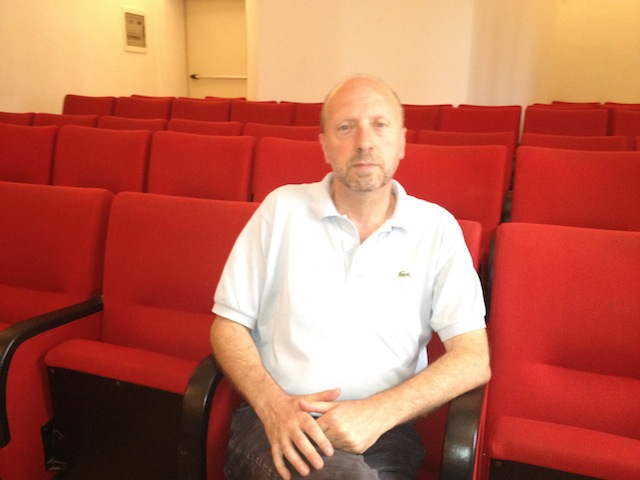 In Varese, summer cinema means “Esterno notte”. This year, the movie season is 25 years old, and it is still being organised by Giulio Rossini, of Filmstudio ’90, the cultural association that also manages a small cinema in Via de Cristoforis, and the large Cinema Nuovo, in Varese.
“Esterno notte”, which, this year, starts on 25 June, in the Estensi Gardens as always (see the programme), shows the season’s movies, occasionally even the very latest ones, and over the years has had over one thousand people in the audience for a single movie.
We spoke to Giulio Rossini, who told us of his memories, anecdotes and of the future, about “Esterno notte” and about the magic of cinema. (video: the interview)
How did “Esterno notte” come about?
“The season was the follow on of a film event by the cultural association ARCI, in 1985, with the then Councillor Caminiti, who some people should still remember. It was he who founded the first public video library, in Varese, which was where the tax office is today. With him, there was the first Varese summer season, which was held in the main entrance of the Gardens, with music, concerts and movies.”
What was the first movie?
“If I remember correctly, it was one of the first movies by Gabriele Salvatores, ‘Sogno di una notte d’estate’ (‘A summer night’s dream’). That year, Paolo Rossi, who was unknown at the time, also came, and he began his career as a comic and cabaret artist. We got 300 people to come to his show.”
And then?
“In 1987, we scheduled a season of movies, called “Effetto notte”, in a marquee, again in the Gardens. Then, the following year, “Esterno notte” officially began, and since then, it’s never missed a Varese summer.”
Where did this passion of yours for cinema come from?
“I used to go to the parish youth club in the Casbeno neighbourhood of Varese, every Sunday afternoon, to watch the 16 mm movies that they showed: Laurel and Hardy, Abbott and Costello, westerns, war movies, children’s movies, everything that fed our imaginations. But the very first movie I saw at the cinema was “Topo Gigio”, at the Cinema Nuovo. And it gives me great satisfaction to be able to manage that cinema today.”
But what did the young Giulio Rossini want to be when he grew up?
“I wanted to be a vet, to work with animals. Then I fell in love with cinema, so much so that, together with my parents, I even watched a season of Soviet movies that were shown on TV. Those are some of my first movie memories.”
Going back to “Esterno notte”, what has been the darkest time in these 25 years?
“I can’t remember any in particular. In general, when it rains. But even then, our audience is always faithful, they just laugh it off. When we showed the movie “Before the rain”, the audience renamed it “Before, during and after the rain”, because of the cloudburst that evening. Another movie that suffered a downpour from beginning to end was Disney’s ‘The Little Mermaid’, but even then, we had 400 people.”
Summer seasons have never lasted long. What is your “recipe”? Why does it work?
“It should be said that we don’t get the numbers we used to. In past years, we had averages of 700 or even 800 people per movie, with peaks of 1100, for example, for Roberto Benigni’s ‘Il Piccolo Diavolo’ (‘The Little Devil’), ‘Buena Vista Social Club’, and ‘Fried Green Tomatoes’, when people climbed the trees to watch them. Today, we get an average of 300 people per evening.”
What’s changed?
“The cinema, as a place in which to see movies, is just a leftover. Movies are seen on the small screen, even on tablets. A movie appears at the cinema at the beginning of its journey, it doesn’t last long; today, the economic return comes afterwards. How movies are watched has changed, and the appearance at the cinema has simply become a way of saying that the movie is real.”
So, given this situation, do summer seasons, like “Esterno notte”, still have any sense?
“For me, cinema means the big screen. The magic of cinema and of the story comes from there. There’s no comparison with the small screen. In the Gardens, we have an 11-metre screen; compared to a normal television, the picture different, the emotions are certainly amplified. And not only: there’s the sharing, the social aspect, watching a movie becomes a collective ritual. This is something that can’t be replaced, and that characterises the showing in the open air, and its meaning.”
Over the years, what’s given you the greatest satisfaction?
“When we showed ‘Why has Bodhi Dharma left for the East?’, an incredible Korean movie, which was only shown in Locarno. I fought on behalf of the distribution company to have the preview during “Esterno notte”. We got over 600 people, it was incredible.”
And the disappointment?
“Not exactly a disappointment, more of a poor impression. At the beginning, when we scheduled “Jules and Jim”, by Truffaut, and we had to send the people home because we didn’t have an anamorphic lens for the cinemascope projection. They must have thought we were amateurs.”
You’ve spoken about a “collective ritual”, but with the technological developments, what do you see is the future for cinema and “Esterno notte”?
“The digital revolution is not changing the spectacular nature of the big screen, quite the opposite. It’s clear that if we want to go on, we have to change our equipment. Even next year, it will be very difficult to find movies on film. This change will cost a lot in economic terms. I don’t know what’s going to happen.”
But does Giulio Rossini still want to go on with this passion of his?
“I’d certainly like to see more cinema, not just organise cinema for others. But we’re an association that has also created a number of professional skills; there’s the passion, and I’m very pleased with the young people who are growing up. For a long time, now, there’s been a process of turnover, and that’s how it should be.”
What is your dream today?
“My real dream for the future is to bring young people, en masse, back to watch movies on the big screen. They’re not used to it, and experiencing the excitement on the big screen is something we mustn’t lose. We’ve still got a lot to do to achieve this.”



Dalla Home
Varese
Lago di Varese mai così basso in inverno e la pioggia ancora non si vede
Varese
Chiesti oltre 30 anni di carcere per la “Banda Vasi”
Castelveccana - Milano
Omicidio di Castelveccana, iniziate le perizie balistiche
Cronaca
Prima a Malpensa e poi in ospedale a Gallarate, ricostruite le ore prima dello schianto mortale in autostrada
La community di VareseNews
Loro ne fanno già parte
Ultimi commenti
mike su La neve in montagna continua a sciogliersi. Contro la siccità si aspetta la pioggia
Felice su La festa "techno" nei boschi di Lonate Ceppino causa proteste
Rolo su Pullman in sosta con i motori accesi, la segnalazione e la risposta di Autolinee Varesine
lenny54 su "C'è del dolo nelle modifiche al Superbonus"
Felice su Architetti, geometri, ingegneri e costruttori all'unisono: "Da Super Bonus a Super Malus"
Felice su Dentro la loggia del Battistero di San Giovanni a Varese restituita alla città









Accedi o registrati per commentare questo articolo.
L'email è richiesta ma non verrà mostrata ai visitatori. Il contenuto di questo commento esprime il pensiero dell'autore e non rappresenta la linea editoriale di VareseNews.it, che rimane autonoma e indipendente. I messaggi inclusi nei commenti non sono testi giornalistici, ma post inviati dai singoli lettori che possono essere automaticamente pubblicati senza filtro preventivo. I commenti che includano uno o più link a siti esterni verranno rimossi in automatico dal sistema.